Road D1, Yen My II Industrial Park, Trung Hung Commune, Yen My District, Hung Yen Province, Vietnam

Category: news

Businesses “buckling” against the wave of price increases 1

Fear of losing competition…

In recent days, the increase in gasoline prices is making many businesses stand still. Because it is common practice that when gasoline increases, many types of services and other input material prices will increase accordingly, which is inevitable.

Doanh nghiệp “oằn mình” chống chọi làn sóng tăng giá

For example, in the field of logistics, Mr. Nguyen Van Tu – General Director of Nhat Tin Development and Investment Joint Stock Company (Nhat Tin logistics) – said: This business is providing transportation services in particular and other logistics solutions in general for the majority of partners and corporate customers across the country. There is an agreement and agreement on freight rates between the parties when signing the contract and Nhat Tin logistics is still applying the announced freight rates throughout the cooperation process. Therefore, when the price of petrol increases, it puts a lot of pressure on direct operating costs at the enterprise because the cost of gasoline for a fleet of more than 450 trucks is increased by 5-7%, while the freight rate does not change. change.

In the same situation, Mr. Le Dang Tam – Director of VIJAI Logistics Vietnam International Co., Ltd – said: In the operation of logistics enterprises, petrol accounts for 35-40% of freight rates. Therefore, if the company does not increase the logistics fee according to the cost of gasoline, the enterprise will suffer a corresponding loss. This means that businesses will have to have a negotiating plan with customers, in case customers do not share, they have to cancel orders. “In the transportation and logistics business in general, there is no obligation for businesses to keep the price the same, but there will be an adjustment of freight rates according to fluctuations in the petroleum market. Therefore, the adjustment of freight rates is inevitable,” said Mr. Tam.

For manufacturing and exporting enterprises – this increase in petrol prices seems to deal another blow to them because from 2021 up to now, they have all faced a dizzying increase in the prices of shipping charges, container charges, and so on. cost of input materials, cost of anti-epidemic…

Mr. Nguyen Dinh Duc – Director of Nha Trang Garment Accessories Joint Stock Company (ISE) – worries: The sharp increase in gasoline prices puts businesses under a lot of pressure, affecting the resumption of production. Mr. Duc explained that, when the price of gasoline increases, the cost of transporting input materials will increase, and the cost of transporting output products will increase and the company has to bear these transportation costs. Besides, the prices of goods and raw materials will adjust according to the price of gasoline, so the price of yarn and fabric may increase in the coming time. “We are in a difficult position. If we don’t increase the cost of our products, we will have to make up for our losses, and if we increase the cost of our products, we won’t be able to compete,” said Mr. Duc.

Synchronized solution to reduce operating costs

In the context that it is difficult to adjust the prices of products and services, many synchronous solutions have been launched by businesses to reduce costs. For example, with Nhat Tin logistics, Mr. Tu said that he has applied technology and scientific processing to operate, as well as using new trucks to optimize, reduce and control costs. At the same time, it is necessary to strengthen internal staff training on how to operate trucks as well as provide knowledge to save fuel during use. However, in the future, if gasoline prices continue to increase, Nhat Tin logistics may have to adjust selling prices to ensure business continuity as well as ensure commitments on service quality.

Meanwhile, for manufacturing enterprises, according to Mr. Phan Van Co – Marketing Director of VRICE Co., Ltd., this enterprise is having to balance to reduce the cost of goods to an acceptable level, and at the same time reduce the purchase of rice at the present time. at to avoid losses.

As for Chanh Viet Investment and Trade Joint Stock Company, Mr. Nguyen Van Hien – CEO of the company – said that he is proactively locating input materials as well as closing the lemon processing value chain for many years, so the benefit from gasoline prices is only 5-7%. “With this increase, we will accept a corresponding reduction in profit to keep the price of export goods as well as orders being distributed in the country” – Mr. Hien informed.
Digital transformation in business: What to do

Break the barriers

According to data from the Ministry of Planning and Investment, there are over 870,000 enterprises in operation nationwide, of which 97% are small and medium-sized enterprises. In the context of complicated developments of the Covid-19 epidemic, the need for digital transformation becomes urgent for businesses to change their models, gradually shift business activities on the digital platform, seek more markets, cut down costs and improve operational efficiency. However, small and medium enterprises face many barriers when implementing digital transformation. According to Director of the Department of Enterprise Development (Ministry of Planning and Investment) Le Manh Hung, the survey results at more than 1,300 domestic enterprises showed that over 60% of enterprises said that barriers they encountered when applying using digital technology is still high cost of investment and application of technology; 52.5% of businesses said that it is difficult to change business habits, making digital transformation goals unachievable.

However, there are also many businesses that have overcome barriers, promoted digital transformation and obtained very encouraging results. As an enterprise in the top 50 in the Ranking of 500 largest enterprises in Vietnam, Information Technology Director of Dai Tan Viet Joint Stock Company (NewViet Dairy) Nguyen Nhat Huy informed that the company has applied the signing solution. electronic FPT.eContract (developed by FPT Corporation) and this solution becomes the solution for businesses. Since February 2021 up to now, nearly 15,000 copies of documents have been successfully signed by the company, helping to bring efficiency to businesses. Similarly, Hanoi Trade Corporation – JSC (Hapro), which owns hundreds of supermarkets, minimarts, food stores, etc., has also shifted to promote multi-channel selling via online shopping applications. BRG shopping online, hotline number, fanpage, home delivery with online payment methods to meet customer needs and adapt to epidemic conditions.

According to the Department of Informatization (Ministry of Information and Communications), after nearly 1 year of implementing the program to support small and medium-sized enterprises in digital transformation – SMEdx, 23 digital platforms of 22 domestic enterprises have been developed. selected and published on the website Smedx.vn. There have been more than 110,000 visits to Smedx.vn website to find out information, more than 16,000 small and medium businesses accessing and experiencing digital platforms selected by the program.

Advances of Vietnam’s electronics industry

Samsung Group from Korea has started manufacturing activities in Vietnam since 2008 with the first investment project being Samsung Electronics Vietnam (SEV) mobile phone factory in Bac Ninh, then Samsung Vietnam continues to build another large manufacturing plant in Thai Nguyen (SEVT). The production activities of these two factories contribute a lot to Samsung’s revenue and profits and the local budget, and they are also Samsung’s two largest mobile phone factories worldwide. After more than 12 years of operation in Vietnam, Samsung now has a total of 6 factories and is building a research and development center in Hanoi.

LG Group is also a large corporation that has invested and operated in Vietnam since 1995. Up to now, LG owns 3 factories producing LG’s main products, including LG Electronics Vietnam Hai Phong, which specializes in manufacturing LG products. electronic products; LG Innotek Vietnam Hai Phong specializes in manufacturing and selling electronic components and LG Display Vietnam Hai Phong specializes in manufacturing LCD and OLED screens.

Intel products Vietnam is an investment project of the US since 2006 and came into operation in 2010, this is the largest US investment in high technology in Vietnam with more than 1 billion USD, bringing Intel products from Vietnam to Vietnam. becoming the largest assembly and testing facility in Intel’s network worldwide. Besides Samsung, Intel is also a name that helps to attract large foreign investment in the high-tech field thanks to advances in technology as well as production. In early 2021, Intel increased its capital by 475 million USD.
Xem thêm về văn bản nguồn nàyNhập văn bản nguồn để có thông tin dịch thuật bổ sung
Gửi phản hồi
Bảng điều khiển bên

Self-reliance in raw materials for sustainable industrial development

According to the Department of Industry (Ministry of Industry and Trade), the situation of dependence on raw materials not only affects production development and economic growth in the short term, but will also continue to affect the industry. in particular and Vietnam’s economy in general in the long run. “Developing supporting industry step by step to be self-sufficient in domestic raw materials and components is one of the core issues for the sustainable development of Vietnam’s industry”, the representative of the Department of Industry stated in detail.

On that basis, it is necessary to improve the capacity of supporting industry enterprises, a prerequisite is to have a developed domestic processing and manufacturing industry. From there, opening up market opportunities for supporting industry enterprises to become suppliers and participate in the supply chain of enterprises producing and assembling final products. In addition, the State also needs to actively expand foreign markets for supporting industry enterprises, along with receiving technical processes and production skills from abroad to improve production capacity.

In addition, the representative of the Department of Industry also mentioned the factors that create opportunities for the formation and development of domestic value chains, through effective investment attraction and promotion of business connections and linkages between enterprises. DN) Vietnam with multinational enterprises, domestic and foreign manufacturing and assembly companies. In which, building concentrated supporting industry zones to create clusters of industry linkages; develop material industries to increase autonomy in input materials for production, reduce dependence on imported sources, thereby improving added value and competitiveness of products and enterprises. Vietnam in the global value chain.

The 4th VEPG Summit: Towards a Sustainable Energy Transition

The 4th Summit organized by the Vietnam Energy Partnership Group (VEPG) will aim to summarize the achievements and positive contributions of VEPG during more than 4 years of operation as the main dialogue forum. High-level policy connecting the Government of Vietnam with development partners and stakeholders with the goal of promoting the development of Vietnam’s energy industry.
It is expected that the conference will take place on January 24, 2022 in both face-to-face and online form with the participation of more than 150 delegates who are representatives of central ministries, agencies, and national ambassadors. , development partners, non-governmental organizations, private enterprises operating in the energy sector. The VEPG Secretariat directly coordinates and supports activities throughout the event.

VEPG was established in June 2017 under an agreement between the Government of Vietnam and development partners. Activities of the Vietnam Energy Partnership Group are chaired by the Minister of Industry and Trade and co-chaired by representatives of the European Union and the World Bank in Vietnam.

The summit aims to summarize the achievements and positive contributions of the VEPG in more than 4 years of operation as a high-level policy dialogue forum connecting the Government of Vietnam with development partners and stakeholders. related to the goal of promoting the development of Vietnam’s energy industry.

The conference also introduced five new technical working groups, including: Strategic planning for the power sector, renewable energy, grid integration and grid infrastructure, energy efficiency and energy markets.

Hội nghị cấp cao VEPG lần thứ 4: Hướng tới chuyển dịch năng lượng bền vững

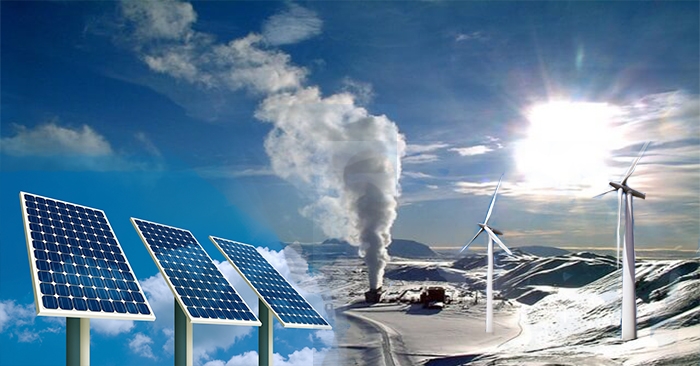
“Together, sustainable energy transition in Vietnam” – VEPG’s new slogan clearly affirms the Group’s goal in the new development phase to continue to ensure close cooperation, effective support and contribute shaping the country’s energy transition. The conference calls for cooperation with non-state actors such as the private sector, civil society and academia.

The Ministry of Industry and Trade has been assigned by the Government the task of developing the Electricity Master Plan VIII with the contents closely following the orientations and principles of Resolution 55-NQ/TW, paying special attention to major contents related to the structure of the electricity sector. electricity industry, power source, and synchronize with the development of electricity system and electricity infrastructure.

2021 is the first year of implementing the Resolution of the 13th Party Congress, and at the same time the first year of implementing and implementing Resolution 55 on orientations of Vietnam’s national energy development strategy to 2030. , with a vision to 2045 (Power planning VIII). In March 2021, the Ministry of Industry and Trade completed and officially submitted the Power Planning Project VIII to the Government.

In that context, Vietnam’s energy industry in general and the electricity industry in particular are facing many challenges. The Covid-19 pandemic is forecasted to continue to cause difficulties for businesses, unpredictable climate change, frequent and more destructive natural disasters. Meanwhile, Vietnam needs to focus on promoting sustainable energy transition, ensuring energy security, supplying enough electricity, investing and developing in the direction of green growth.

During the COP 26 Conference, Prime Minister Pham Minh Chinh identified Vietnam’s commitment to develop and implement stronger measures to reduce greenhouse gas emissions with its own resources, along with cooperation and support from the international community, both financially and in technology transfer, including the implementation of mechanisms under the Paris Agreement, to achieve net zero emissions by 2050. To achieve the target This requires the parallelism of the energy industry, ensuring a sustainable transition, towards a green, circular, people-centered economy, leaving no one behind.

Manufacturing industry: Good news at the beginning of the year

In the first month of 2022, at Song Khoai Industrial Park (Quang Yen Town – Quang Ninh Province), Jinko Solar Vietnam Industry Co., Ltd. started production and launched the first product of the panel technology project. silicon Jinko Solar Vietnam. The project has an investment scale of over 8,380 billion VND (equivalent to 365.6 million USD). Although the investor has just been granted an investment registration certificate from the end of September 2021, only after nearly 4 months of construction, the investor has launched and produced the first product, 7 months ahead of the plan. initial. The project has an investment rate of 417 billion VND/ha (equivalent to 18.18 million USD/ha) – the highest among secondary projects in the current industrial zones of Quang Ninh province.Previously, at the end of March 2021, Quang Ninh awarded the investment registration certificate for the Jinko Solar PV Vietnam photovoltaic cell technology project with an investment capital of 11,499.86 billion VND (equivalent to 498 billion VND). million USD), land use area 32.6ha. Thus, the total investment capital of the two projects that Jinko Solar Group invests in Song Khoai Industrial Park is up to 19,882 billion VND (equivalent to 865.6 million USD). This project plays an important role in completing the chain of large-scale solar panel production in Vietnam of Jinko Solar Group. It is expected that when officially put into operation in April 2022, the project will create job opportunities for 2,200 local workers, and also add good news about the processing and manufacturing industry in 2022.

Industrial production: Catching up at the beginning of the year

The report on socio-economic situation in January 2022 released by the General Statistics Office shows that, because it is the time to promote the consumption of industrial products, the industrial production index in January 2022 is estimated to decrease. 3.1% over the previous month and up 2.4% over the same period last year, of which the processing and manufacturing industry increased by 2.8% and contributed 2.6 percentage points to the overall growth.

Notably, electricity production and distribution increased by 5.1%, contributing 0.5 percentage points; water supply, management and treatment of waste and wastewater increased by 1.2%, contributing 0.02 percentage points; the mining industry alone decreased by 4.6%, decreasing by 0.7 percentage points.

Besides, the production index in January 2022 of a number of key secondary industries increased sharply compared to the same period last year. Specifically, metal ore mining increased by 21.9%; production of prefabricated metal products (except for machinery and equipment) increased by 16.8%; production of leather and related products by 12.3%; production of electrical equipment increased by 11.5%; production of costumes increased by 11.4%; textile increased by 8.8%; printing, copying records of all kinds increased by 8.4%; production of rubber and plastic products increased by 8.1%.

Meanwhile, the industrial index of a number of industries decreased, such as: Beverage production decreased by 2.7%; production of drugs, pharmaceutical chemicals and medicinal materials decreased by 3.6%; production of electronic products, computers and optical products decreased by 5%; wood processing and production of wood, bamboo and cork products decreased by 5.1%; crude oil and natural gas extraction decreased by 9.7%.

However, a number of key industrial products in January 2022 increased sharply compared to the same period last year, including: Alumin up 35.7%; bar steel, angle steel by 20.3%; powdered milk by 16.2%; mixed fertilizer NPK increased by 15.6%; MSG by 15.4%; processed seafood increased by 13.8%; automobiles by 11.7%; fabrics woven from natural fibers increased by 8.7%.

Self-reliance in raw materials for sustainable industrial development

According to the Ministry of Industry and Trade, the supporting industry is underdeveloped, in fact, Vietnam’s processing and manufacturing industry is very dependent on the supply of imported input materials, components, and components – especially the industrial sectors. key industries such as electronics; textile; leather – shoes – bags; Therefore, when the Covid-19 epidemic broke out in the countries supplying parts and accessories mainly for Vietnam such as China, Korea, Japan… , the domestic industry has encountered many difficulties in securing production inputs. It was not until the above-mentioned countries passed the peak of the epidemic that the supply of imported raw materials for Vietnam’s manufacturing industries was restored.

The assessment of the impact of the Covid-19 epidemic on domestic manufacturing industries has clearly revealed one of the weaknesses of the Vietnamese economy: The internal resources of the manufacturing industry are limited, depending heavily on the domestic industry. foreign supply chains; The underdeveloped supporting industry makes Vietnam unable to be self-sufficient in input factors of production, leading to a state of dependence on imported components and raw materials (but the trade deficit of inputs for the production of goods). production is a situation that has lasted for many years), making the added value of domestic industries very low.

According to the Ministry of Industry and Trade, in recent years, the manufacturing and processing industry has accounted for a high proportion of nearly 40% of the total net sales of production and business of the economy, but only contributed about 14% of GDP. value added is very low compared to other industries. Data from the Organization for Economic Cooperation and Development (OECD) also show that, in the past five years, in the structure of added value in Vietnam’s export products, value added from abroad is still accounts for a large proportion, especially from China and Korea, while the proportion of domestic value-added content is still low and has not yet changed significantly (two key export products of Vietnam are textiles and electronic goods have a domestic value-added ratio of just over 50% and over 377%, respectively.

Must have a broader vision on the development of Aluminium and aluminum industry in Vietnam

Bringing overall efficiency in both socio-economic terms

Implementing the conclusion of the Politburo, 2 pilot investment projects to exploit and process bauxite ore into Alumin (the main raw material for aluminum refining) in Tan Rai, Bao Loc, Lam Dong and Nhan Co in Dak Nong were started. in 2008 and 2010 initially achieved economic efficiency.

Although it was deployed at a time when there were many different views on bauxite mining and processing in the Central Highlands and the low price of Alumin on the world market, since 2017, Alumin factories have started making early profits. 1 year longer than planned. Thanks to the use of modern technology in the world, the purity of Alumin is higher than the design, with less energy consumption. Both factories strictly complied with the law on budget, taxes and fees, and have basically paid off loan capital and bank interest. The Vietnam Coal and Mineral Industries Group affirmed that if the world alumina price drops from 12% to 17%, both projects will still be economically viable.

Reporting at the meeting, Deputy Minister of Industry and Trade Do Thang Hai said that the two projects basically met the requirements of the Politburo. In which, the Ministry of Natural Resources and Environment has completed the bauxite ore exploration project. Accordingly, the two projects basically satisfied the requirements of environmental protection, in which the safety factor of the red mud lake was increased by 3 times, the return of land and afforestation immediately after exploitation were carried out properly. as required. The investor has also built power plants to ensure power supply for the 2 plants. “With the results recorded from 2 projects, for the first time, Vietnam basically mastered the Alumin production technology with young human resources, and at the same time attracted investors to initially form the Alumin industry and refinery. aluminum in Vietnam” – Deputy Minister said.

Another important issue is that when the two projects operate, the preservation and preservation of cultural identities of ethnic groups in the Central Highlands and national security and national defense are still ensured. The income of local people has increased, from 17 million VND/year on average before 2007, up to now, it has increased to 65 million VND/year.

It can be affirmed that, after 10 years of pilot implementation of two bauxite mining and processing projects, Tan Rai and Nhan Co, this shows that this is the right policy of the Party and State, bringing about overall efficiency in both economic economy – society, ensuring security – defense, making an important contribution to changing the face of the Central Highlands according to the principle of effectively exploiting the potential of this region.

The Prime Minister pointed out that the report needs to be comprehensive, in-depth and more visionary on the development of the Alumina and aluminum industry in Vietnam to 2025 and 2030. In fact, there are two pilot mining projects. bauxite and alumina processing Tan Rai and Nhan Co have made certain contributions to the country’s economy, attracting investors to the aluminum smelting field, thereby promoting the development of the mechanical and equipment manufacturing industry. equipment and auxiliary chemicals. “These projects have made positive contributions to the development of the Central Highlands in recent years, a premise to consider the expansion of bauxite mining and processing in the Central Highlands when the planning is approved by competent authorities.” – The Prime Minister emphasized.

The Prime Minister also requested that, in the future, if the Alumin and aluminum industries are to be developed on the basis of these two factories, they must be associated with the market and ensure economic efficiency, because aluminum smelting often requires a lot of electricity. Accordingly, it is necessary to mobilize potential businesses from many other sectors to invest in projects. “Besides, it is necessary to research and develop off-road transport modes from factories in the Central Highlands to seaports, along with the application of new technology to treat red mud,” noted the Prime Minister.

The Prime Minister further suggested that in order to sustainably develop the aluminum industry and aluminum smelting, special attention must be paid to environmental protection, ensuring security, national defense, social order and safety. Especially to protect the living environment of the Central Highlands people including mountains, forests, water, air and unique cultural space of ethnic minorities.

Opportunities for mechanical enterprises to develop

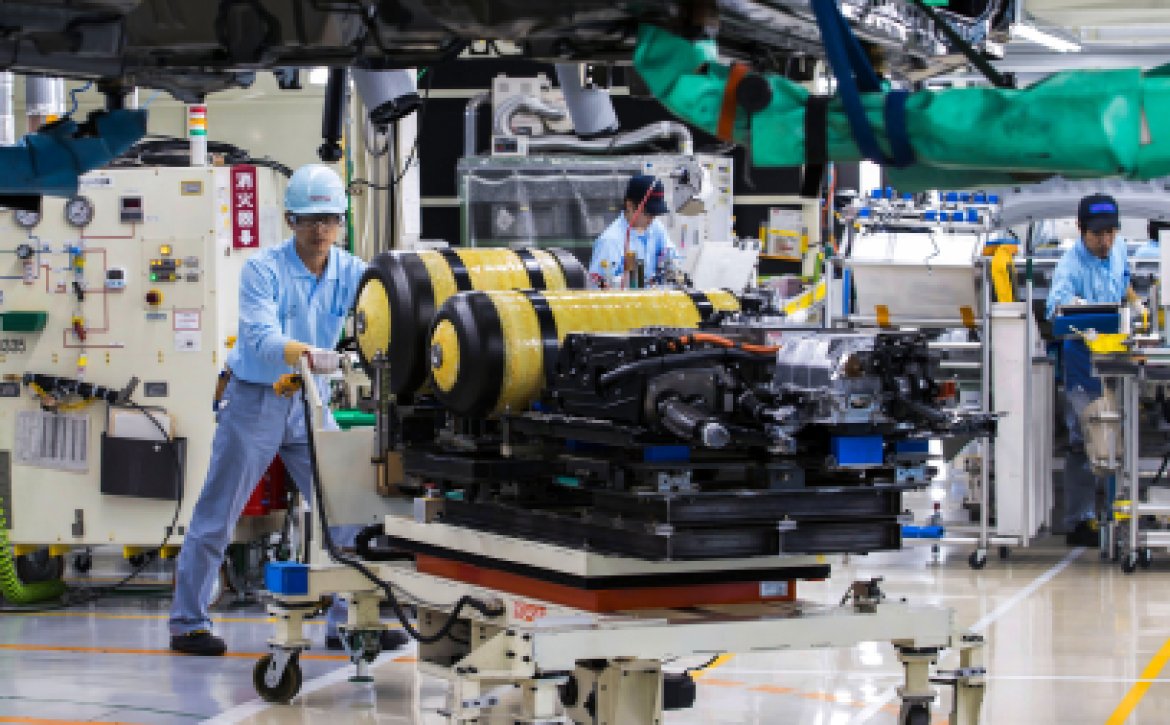
According to a report from the Vietnam Association of Supporting Industries (VASI), in 2020, due to the impact of the epidemic, nearly 50% of businesses under the association have a sharp decrease in revenue. But with flexible solutions to quickly respond to difficulties, many enterprises have actively stabilized production and rearranged the management apparatus; since then, still have orders, overcome the most difficult period of the epidemic. Up to now, businesses have basically found a source of goods, reconnected with export partners and gradually recovered.

In fact, when the epidemic occurred, many businesses said that they had changed their business plans and strategies to be able to survive and develop. In the past, technology transfer was usually done by foreign countries, but in the past year many enterprises have made full use of existing capacity conditions, restructured, changed core processes, used machinery and equipment. domestic equipment to be more active in production.

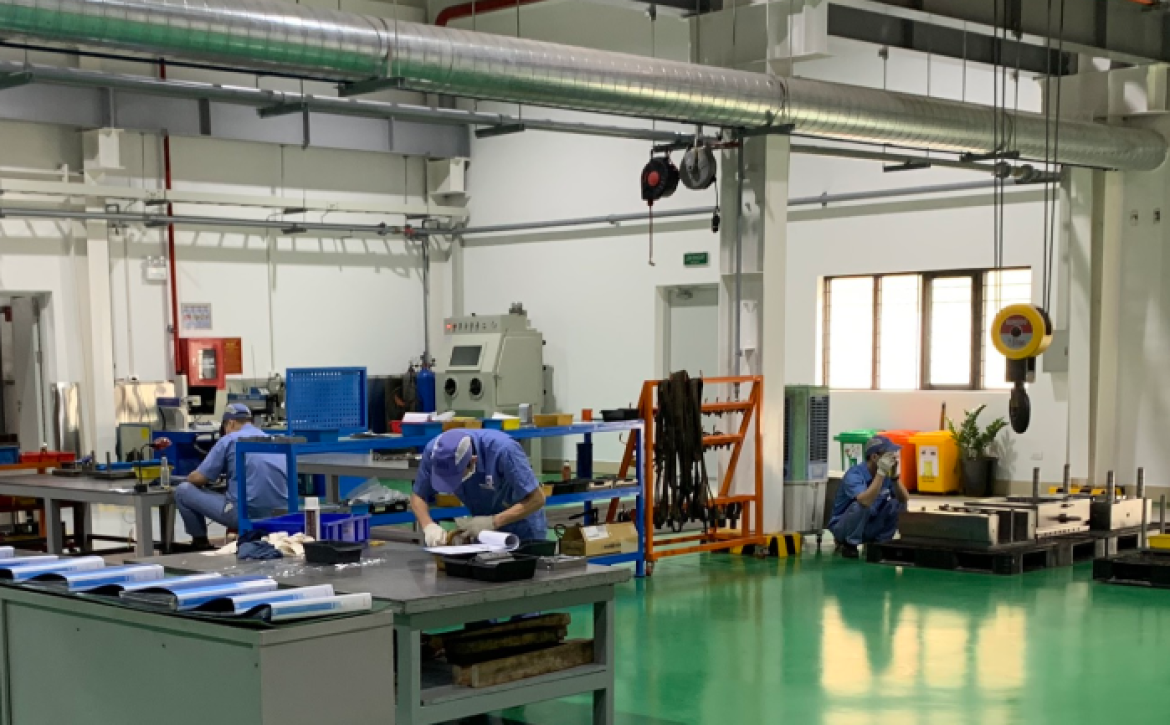
In order to help each other overcome difficulties, the business community has also made efforts to help each other through order sharing, processing and product discounts… At Haitian Vietnam Co., Ltd., businesses offer a 5% discount program. on the value of the machine and only need to deposit 5% to be able to ship the machine to a partner factory for production, the remaining 95% is paid in installments within 2 years. Or like Huy Hoang Gia Steel Co., Ltd., Vietsteel Company, down 10% (depending on product)…. Currently, domestic mechanical components manufacturing enterprises also have quite good capacity in some areas. fields such as: Molds of all kinds, mechanical components, electrical cables, plastic components, technical rubber… In addition, the demand of the supporting industry market is very large, so many enterprises has boldly invested to improve production capacity, focusing on developing quality product lines, serving foreign direct investment (FDI) enterprises, focusing on exporting mechanical products- Mr. .